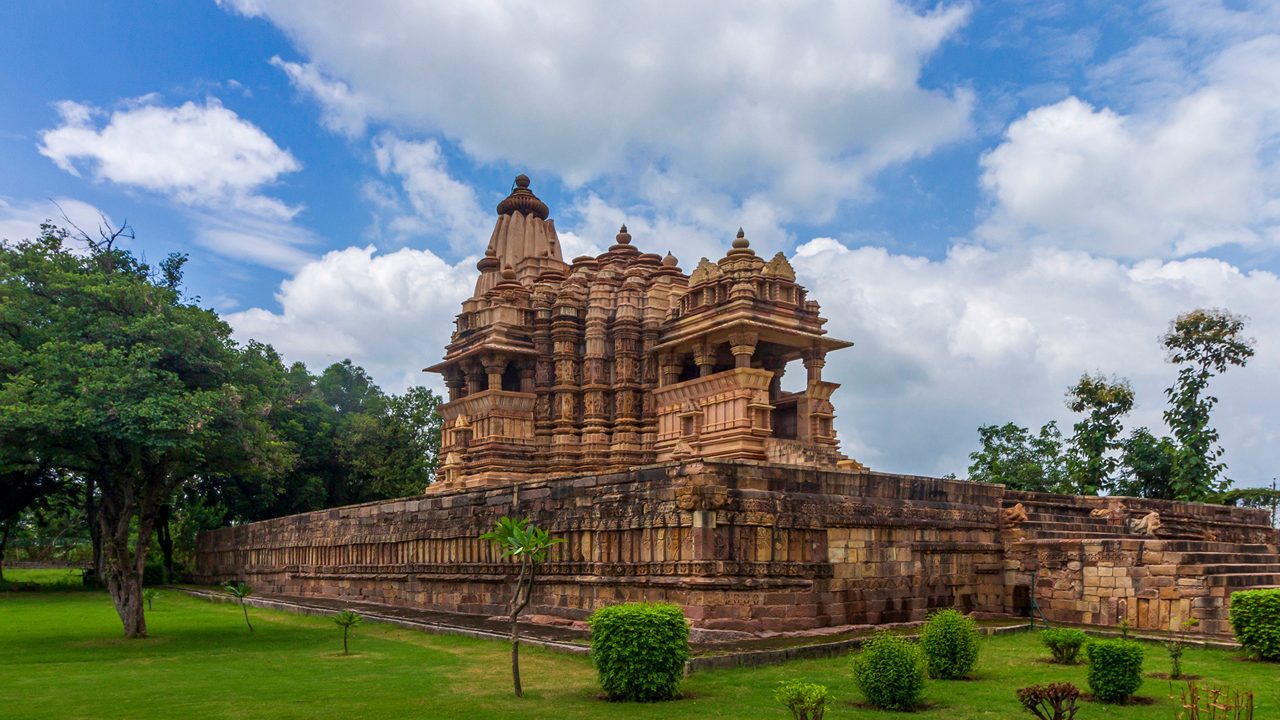
When one thinks of architectural marvels in India, the Khajuraho temples effortlessly find their place among the top. Located in the heart of India, Khajuraho, Madhya Pradesh, this UNESCO World Heritage Site is famous for its intricate sculptures, spiritual ambiance, and the extraordinary art of Khajuraho temple structures.
About Khajuraho Temple: A Legacy Carved in Stone
The Khajuraho India temple complex dates back to the 10th and 11th centuries and was built by the Chandela dynasty. Originally, there were around 85 temples, but today, 25 remain as timeless symbols of India’s cultural heritage and craftsmanship. These temples are divided into three groups: the Western, Eastern, and Southern groups — each showcasing a distinct architectural style and theme.
The Sculptural Brilliance of Khajuraho
One of the most captivating features of the Khajuraho temples is the abundance of detailed sculptures. The Khajuraho temple sculptures are renowned for depicting not just deities and mythological scenes, but also everyday life — dancers, musicians, farmers, and lovers. These carvings are not just erotic, as often highlighted, but are part of a larger narrative of human experience and spiritual symbolism.
The Khajuraho sculptures exhibit a rare combination of grace, sensuality, and spiritual expression. Crafted in sandstone, these figures are so detailed and lifelike that they seem to speak across time.
Khajuraho Temples in Madhya Pradesh: Where History Meets Art
The Khajuraho temples in Madhya Pradesh were built between 950 and 1050 AD, under the rule of the Chandela kings. Once comprising around 85 temples, only 25 survive today, yet they still captivate visitors with their exquisite carvings and intricate symbolism. These temples are categorized into three groups: Western, Eastern, and Southern, each hosting temples dedicated to Hindu and Jain deities.
The Spiritual Soul of Khajuraho India Temple
Each Khajuraho India temple is a masterpiece in itself—both spiritually and artistically. The temples are aligned with celestial movements and built in the traditional Nagara-style architecture, featuring elevated platforms, towering spires, and finely detailed sculptures.
Among the many, the Kandariya Mahadeva Temple at Khajuraho stands tall and majestic. Dedicated to Lord Shiva, it is the largest and most intricately carved temple in the complex, symbolizing the cosmic mountain Mount Meru and capturing the essence of the art of Khajuraho temple architecture.
Khajuraho Temple Sculptures: Sensuality, Symbolism, and Skill
The highlight of any visit to Khajuraho is the breathtaking Khajuraho temple sculptures. These carvings, etched into sandstone, reflect every facet of life—divinity, sensuality, nature, music, dance, war, and peace. While the erotic figures often attract attention, they form only a small part of the grand visual narrative.
The Khajuraho sculptures represent a time when life was celebrated in its entirety—body, mind, and soul. They express the concept of kama (desire) as one of the four main goals of human life in ancient Indian philosophy.
Khajuraho Temples: A Harmony of Art, Religion, and Life
The art of Khajuraho temple architecture lies in its ability to blend religious symbolism with worldly pleasures, reflecting a society that celebrated life in all its forms. Temples like the Kandariya Mahadev, Lakshmana, and Vishwanatha temples are prime examples where spirituality meets sensuality through extraordinary craftsmanship.
These temples are dedicated to Hindu and Jain deities, portraying a sense of tolerance and acceptance that was prevalent in ancient Indian society.
Why Visit Khajuraho?
A trip to the Khajuraho temples Madhya Pradesh is more than just a historical tour. It’s a journey through India’s rich artistic and spiritual heritage. With light and sound shows, guided tours, and the annual Khajuraho Dance Festival, visitors are given a deeper understanding of the art and culture that flourished here over a thousand years ago.
Exploring Khajuraho City
The Khajuraho city itself is a charming town steeped in culture and tranquility. It’s well-connected by air, rail, and road and is surrounded by beautiful rural landscapes. The town comes alive during the annual Khajuraho Dance Festival, where classical dancers from across India perform against the dramatic backdrop of illuminated temples.
Final Thoughts
Whether you’re an art enthusiast, history lover, or spiritual seeker, Khajuraho India temple offers an unforgettable experience. The Khajuraho temple sculptures are not only artistic masterpieces but also timeless storytellers of a golden age in Indian history.
Here's a complete Nepal tour itinerary that covers cultural landmarks, natural beauty, adventure, and spiritual sites. This plan spans 12 Read more

Here are 10 of the top world tour destinations in 2025, based on travel trends, cultural richness, natural beauty, and Read more
Planning a Nepal tour from India? Discover the best travel routes, tour packages, visa info, and must-visit places in Nepal Read more

Best luxury villas in north goa - Here’s a list of top-rated luxury villas in North Goa that offer premium Read more
One thought on “Discovering the Timeless Beauty of Khajuraho Temples in Madhya Pradesh”
Comments are closed.