
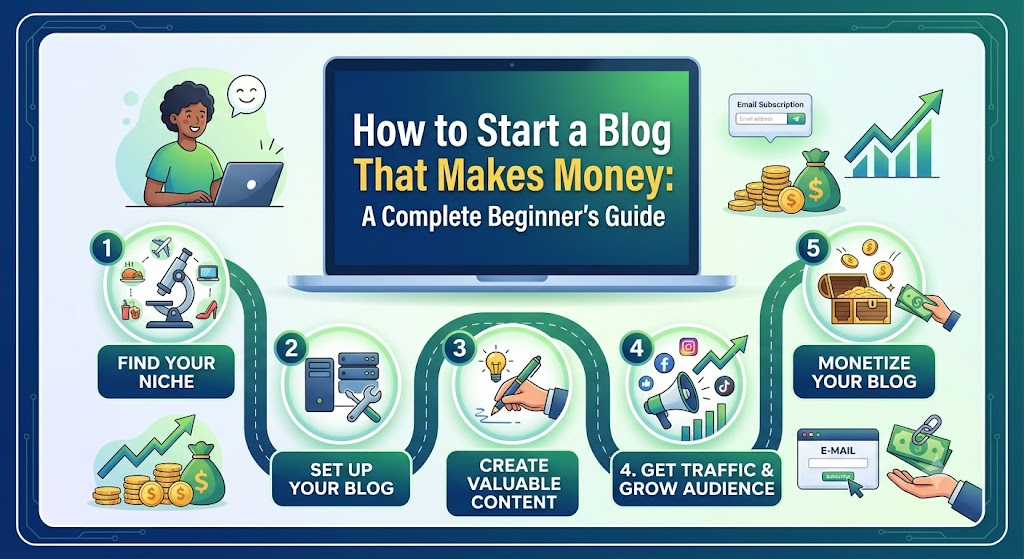
Learn how to start a profitable blog from scratch. Discover how to choose a niche, create content, drive traffic, and earn money through ads, affiliate marketing, and digital products.
How to Start a Blog That Makes Money
Blogging is no longer just an online diary—it has become a powerful way to build a personal brand, share knowledge, and create multiple streams of income. Thousands of bloggers earn money by publishing valuable content and attracting readers through search engines and social media.
If you’ve been wondering how to start a blog that actually generates income, this step-by-step guide from Grow With Tejas will show you the process.
Can You Really Make Money Blogging?
Yes, many bloggers earn income from their websites. However, blogging is not a get-rich-quick method. It usually takes consistent effort, quality content, and time to build traffic and trust.
Successful bloggers often earn through:
- Display advertising
- Affiliate marketing
- Sponsored content
- Digital products
- Online courses
- Freelancing or consulting
- Membership communities
The more useful your content is, the greater your long-term earning potential.
Step 1: Choose a Profitable Niche
Your niche is the main topic of your blog.
Choose something that:
- You enjoy learning about
- Has long-term search demand
- Solves real problems
- Offers monetization opportunities
Popular profitable niches include:
- Artificial Intelligence (AI)
- Personal Finance
- Digital Marketing
- Blogging & SEO
- Technology
- Health & Wellness
- Travel
- Education
- Productivity
- Small Business
Step 2: Choose a Domain Name
A domain name is your website’s address on the internet.
A good domain should be:
- Short and memorable
- Easy to spell
- Relevant to your niche
- Brandable
Example:
GrowWithTejas.com
Step 3: Buy Web Hosting
Your website needs hosting to be accessible online.
When choosing a hosting provider, consider:
- Fast loading speed
- Good customer support
- Strong security
- Daily backups
- Scalability
Choose a plan that can grow with your website as traffic increases.
Step 4: Install WordPress
WordPress powers millions of websites because it is:
- Beginner-friendly
- Flexible
- SEO-friendly
- Supported by thousands of plugins and themes
Install WordPress and select a clean, responsive theme that works well on both desktop and mobile devices.
Step 5: Design Your Blog
Essential pages include:
- Home
- About
- Contact
- Privacy Policy
- Disclaimer
- Terms & Conditions
Use a simple navigation menu and avoid unnecessary clutter.
Step 6: Create High-Quality Content
Content is the foundation of every successful blog.
Write articles that:
- Answer readers’ questions
- Solve practical problems
- Include examples
- Are well-structured with headings
- Use clear and simple language
Aim for comprehensive, original content rather than copying information from other websites.
Step 7: Learn Basic SEO
Search Engine Optimization (SEO) helps your articles appear in search results.
Basic SEO includes:
- Target one primary keyword
- Write an engaging title
- Use descriptive headings
- Add internal links
- Include relevant images with alt text
- Write compelling meta descriptions
- Improve page speed
Step 8: Publish Consistently
Consistency matters more than perfection.
A simple publishing schedule could be:
- 2–3 articles per week for beginners
- Focus on quality over quantity
- Update older articles regularly
Over time, your library of useful content can continue attracting visitors.
Step 9: Promote Your Blog
Don’t rely only on search engines.
Share your content on:
- X (Twitter)
- Email newsletters
- Relevant online communities (while following community rules)
Promotion helps new articles gain visibility.
Step 10: Monetize Your Blog
1. Display Advertising
Advertising networks allow you to earn money when visitors view or interact with ads.
Revenue depends on factors such as traffic volume, audience location, and niche.
2. Affiliate Marketing
Recommend products or services that genuinely help your audience.
You may earn a commission when readers purchase through your referral links.
Always disclose affiliate relationships and recommend products you trust.
3. Digital Products
Examples include:
- eBooks
- Templates
- Prompt collections
- Checklists
- Online courses
Digital products can become an important long-term revenue source.
4. Sponsored Content
As your audience grows, brands may pay for reviews, tutorials, or sponsored articles that are relevant to your readers.
Maintain transparency with your audience about sponsored content.
5. Services
Many bloggers also offer:
- SEO consulting
- Website audits
- Coaching
- Freelancing
- Content writing
Your blog can become a portfolio that attracts clients.
Common Blogging Mistakes
Avoid these common errors:
- Choosing a niche only because it seems profitable
- Publishing low-quality or copied content
- Ignoring SEO
- Expecting quick results
- Inconsistent publishing
- Neglecting website performance
- Not building an email list
How Long Does It Take to Make Money?
Every blog grows differently.
With consistent publishing, SEO, and promotion, some blogs begin earning within several months, while others may take a year or longer. The timeline depends on factors such as niche competition, content quality, and traffic growth.
Tips for Long-Term Blogging Success
- Focus on helping readers first.
- Publish consistently.
- Improve older articles.
- Build topical authority around your niche.
- Learn from analytics.
- Stay updated with industry trends.
- Diversify your income sources.
Frequently Asked Questions
Can beginners start a blog?
Yes. Many successful blogs started with no prior experience. Learning consistently and publishing helpful content are more important than being an expert on day one.
Do I need technical skills?
No. Modern website platforms make it possible to launch a blog without advanced coding knowledge.
Can I start blogging with a small budget?
Yes. A domain name, hosting, and a simple website are enough to begin. As your blog grows, you can invest in premium tools if needed.
Which niche is best for blogging?
Choose a niche that combines your interests, audience demand, and monetization opportunities. AI, digital marketing, personal finance, technology, and travel are examples of evergreen niches.
How many articles should I publish?
Quality matters more than quantity. A consistent publishing schedule is usually more effective than publishing many articles at once and then stopping.
Conclusion
Starting a blog that makes money requires patience, consistency, and a commitment to creating valuable content. Instead of focusing only on earnings, concentrate on solving readers’ problems and building trust. As your traffic grows, you can expand your income through advertising, affiliate marketing, digital products, and services.
The best time to start is today. Every helpful article you publish becomes a long-term asset that can continue bringing readers and opportunities for years to come.
About Grow With Tejas
Grow With Tejas is dedicated to helping entrepreneurs, bloggers, creators, and small businesses succeed online through practical guides on AI, SEO, blogging, digital marketing, online business, productivity, and technology. Our mission is to simplify complex topics and provide actionable strategies that support sustainable digital growth.

Here's a complete Nepal tour itinerary that covers cultural landmarks, natural beauty, adventure, and spiritual sites. This plan spans 12 Read more

Here are 10 of the top world tour destinations in 2025, based on travel trends, cultural richness, natural beauty, and Read more

Planning a Nepal tour from India? Discover the best travel routes, tour packages, visa info, and must-visit places in Nepal Read more

Best luxury villas in north goa - Here’s a list of top-rated luxury villas in North Goa that offer premium Read more
Here's a complete Nepal tour itinerary that covers cultural landmarks, natural beauty, adventure, and spiritual sites. This plan spans 12 Read more
Here are 10 of the top world tour destinations in 2025, based on travel trends, cultural richness, natural beauty, and Read more
Planning a Nepal tour from India? Discover the best travel routes, tour packages, visa info, and must-visit places in Nepal Read more
Best luxury villas in north goa - Here’s a list of top-rated luxury villas in North Goa that offer premium Read more