How Google Search Works Explained Simply
Have you ever wondered how Google finds millions of websites in less than a second?
Every day, billions of people use Google to search for answers, products, services, and information. Yet very few people understand what actually happens behind the scenes.
In this beginner-friendly guide, you’ll learn how Google Search works explained simply, without complicated technical terms. Whether you’re a blogger, business owner, student, or someone learning SEO, this guide will help you understand the basics.
What Is Google Search?
Google Search is a search engine that helps people find information on the internet.
When you type a keyword such as:
- Best smartphones
- SEO tips
- Weather today
- AI tools
Google searches through its enormous database of web pages and displays the most relevant results.
Google’s goal is simple:
Provide the most useful answer to every search query.
25 Best AI Tools for Small Business Owners
The Three Main Steps of Google Search
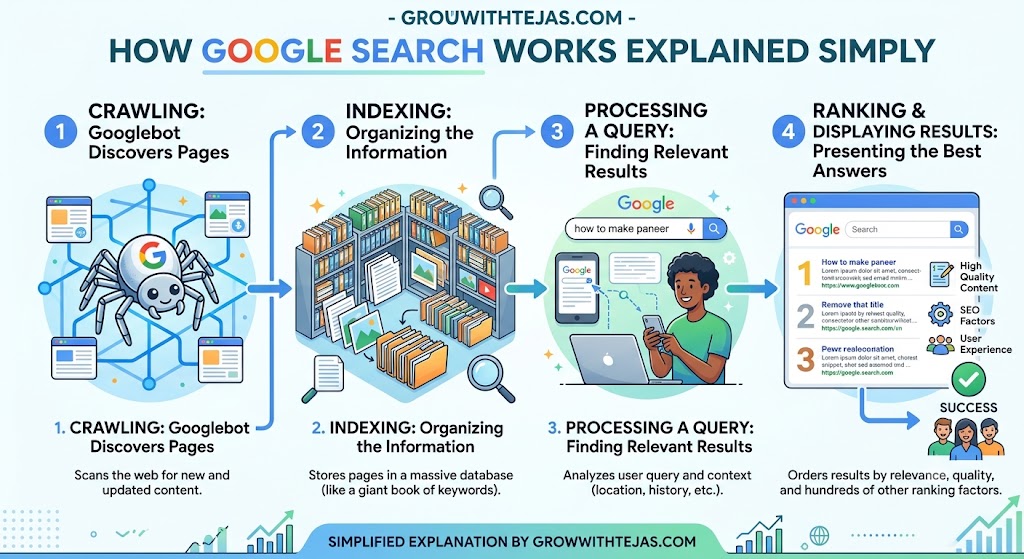
Google Search works in three major stages:
- Crawling
- Indexing
- Ranking
Let’s understand each one.
Step 1: Crawling
Think of Google as having millions of tiny robots called Googlebots.
These bots continuously visit websites across the internet.
Their job is to:
- Discover new pages
- Find updated content
- Follow internal links
- Read text, images, and videos
For example:
You publish a new blog post today.
Googlebot eventually visits your website and discovers that new page.
This process is called crawling.
Step 2: Indexing
After Google discovers your page, it tries to understand it.
Google analyzes:
- Page title
- Headings
- Content
- Images
- Keywords
- Meta description
- Internal links
- Structured data
If everything looks good, Google stores the page in its huge database.
This database is called the Google Index.
Imagine it as the world’s largest digital library.
If your page isn’t indexed, it usually won’t appear in Google search results.
On-Page SEO Checklist & Strategy Guide: Step-by-Step Optimization
Step 3: Ranking
When someone searches for something, Google doesn’t search the internet live.
Instead, it searches its indexed database.
Then Google’s algorithm decides:
- Which pages are most helpful
- Which pages are trustworthy
- Which pages answer the user’s question best
Finally, Google ranks those pages from best to least relevant.
This process happens in less than one second.
Example of How Google Search Works
Imagine you search:
“Best AI tools for students.”
Google will:
- Search its index.
- Find thousands of matching pages.
- Compare content quality.
- Evaluate user experience.
- Check relevance.
- Rank the best pages.
You then see the search results on the first page.
What Factors Help a Page Rank Higher?
Google uses hundreds of ranking signals. Some of the most important include:
High-Quality Content
Useful, original, and informative content performs better than copied or thin content.
Relevant Keywords
Use keywords naturally in:
- Title
- Headings
- URL
- Content
- Image alt text
Avoid keyword stuffing.
Fast Website Speed
People prefer websites that load quickly.
A faster site often provides a better user experience.
Mobile-Friendly Design
Most searches happen on smartphones.
Google prioritizes websites that work well on mobile devices.
Secure Website (HTTPS)
A secure connection builds trust with visitors.
Backlinks
When trusted websites link to your content, Google sees it as a positive signal.
User Experience
Easy navigation, readable content, and low bounce rates can contribute to better performance.
What Is Artificial Intelligence? A Beginner’s Guide
What Is Google’s Algorithm?
Google’s algorithm is a complex system that decides which pages should appear first.
It considers many factors, including:
- Relevance
- Authority
- Freshness
- Content quality
- User experience
- Search intent
Google regularly updates its algorithm to improve search quality.
Why Doesn’t Every Website Rank on Page One?
There are millions of pages competing for the same keywords.
Google selects the pages that best satisfy the user’s search intent.
Poor rankings may happen because of:
- Weak content
- Slow loading speed
- Duplicate content
- Lack of backlinks
- Poor SEO
- Technical issues
What Is SEO?
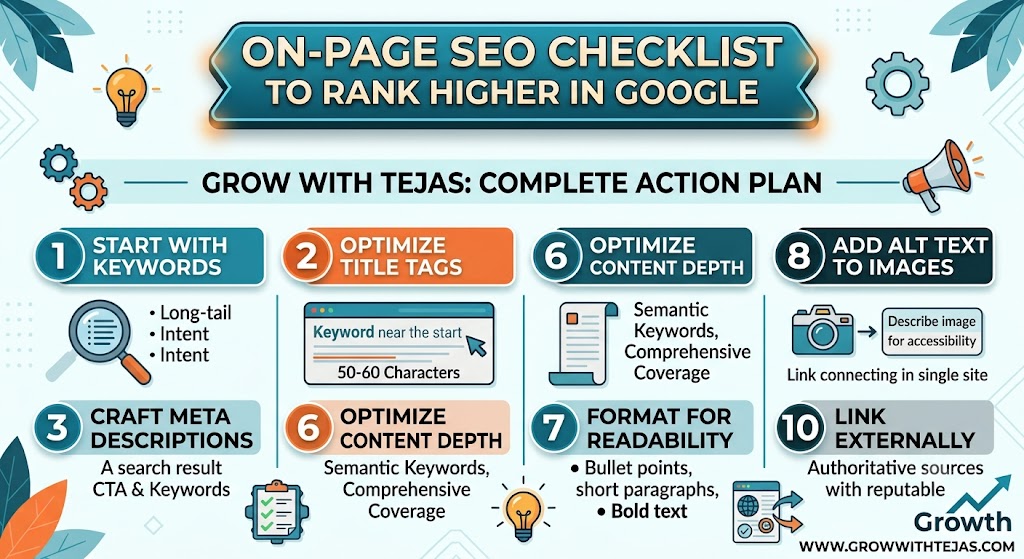
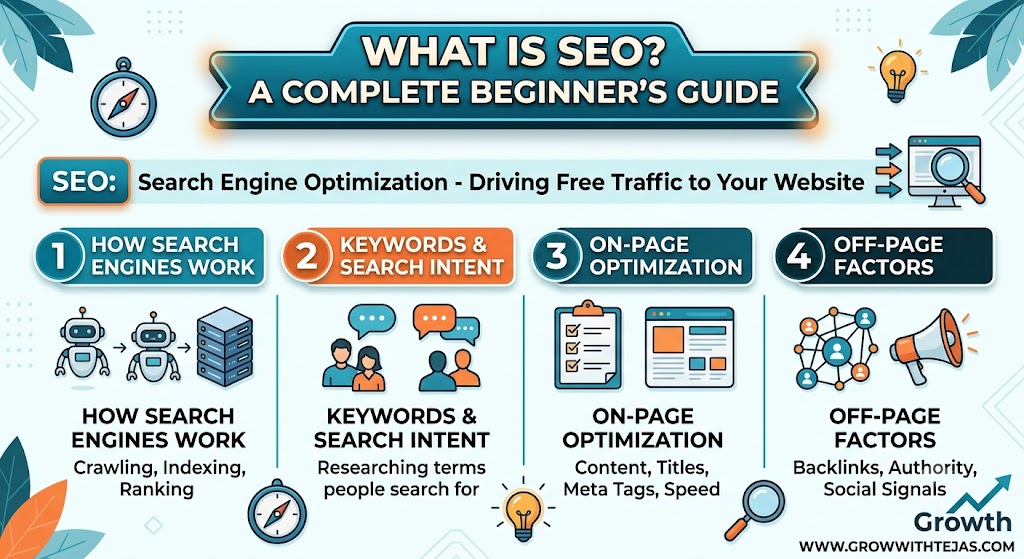
SEO (Search Engine Optimization) is the process of improving your website so Google can better understand and rank it.
Good SEO includes:
- Writing useful content
- Choosing the right keywords
- Optimizing page titles
- Improving page speed
- Building quality backlinks
- Creating a mobile-friendly website
SEO helps increase organic (free) traffic from search engines.
Can You Submit Your Website to Google?
Yes.
You can submit your website using Google Search Console.
Submitting a sitemap helps Google discover your pages faster, although Google can also find pages through links.
How Long Does Google Take to Index a Page?
There is no fixed timeline.
It may take:
- A few hours
- Several days
- A few weeks
Factors include:
- Website authority
- Crawl frequency
- Site structure
- Internal linking
- Content quality
Common Myths About Google Search
Myth 1: More Keywords Mean Higher Rankings
False. Overusing keywords can hurt your SEO.
Myth 2: New Websites Cannot Rank
False. Great content can rank even on newer websites.
Myth 3: Google Reads Every Page Instantly
False. Google crawls websites on its own schedule.
Myth 4: Paid Ads Improve Organic Rankings
False. Google Ads do not directly improve organic search rankings.
Tips to Help Google Understand Your Website
- Publish original content regularly.
- Use descriptive page titles.
- Write clear headings.
- Add internal links.
- Optimize images with alt text.
- Improve page speed.
- Keep your website mobile-friendly.
- Create and submit an XML sitemap.
- Fix broken links.
- Update older articles with fresh information.
Final Thoughts
Understanding how Google Search works explained simply gives you a strong foundation for learning SEO.
Remember the three key steps:
- Google discovers pages through crawling.
- It stores them during indexing.
- It chooses the best results through ranking.
If you focus on creating valuable content and providing a great user experience, you’ll give your website the best chance to earn higher visibility in Google Search over time.
Frequently Asked Questions (FAQs)
1. How does Google Search work?
Google works by crawling websites, indexing their content, and ranking pages based on relevance and quality.
2. What is crawling?
Crawling is when Googlebot visits websites to discover new or updated pages.
3. What is indexing?
Indexing is the process of storing and organizing web pages in Google’s database.
4. What is ranking?
Ranking is how Google orders search results according to relevance and usefulness.
5. Does SEO help websites rank higher?
Yes. Good SEO improves a website’s chances of appearing higher in search results.
6. How long does Google take to index a website?
It can take from a few hours to several weeks, depending on the website and its content.
7. Does Google rank new websites?
Yes. New websites can rank if they provide high-quality, relevant, and well-optimized content.
8. What is Googlebot?
Googlebot is Google’s web crawler that discovers and scans web pages.
9. Why is mobile-friendly design important?
Because most users search on mobile devices, and Google uses mobile-first indexing.
10. What is the Google Index?
The Google Index is Google’s massive database of web pages that can appear in search results.