AI Compliance Auditing Software: Everything You Need to Know
Artificial Intelligence (AI) is transforming businesses across healthcare, finance, manufacturing, education, retail, and government. However, as organizations increasingly rely on AI systems, regulators are introducing stricter compliance requirements.
This is where AI compliance auditing software becomes essential.
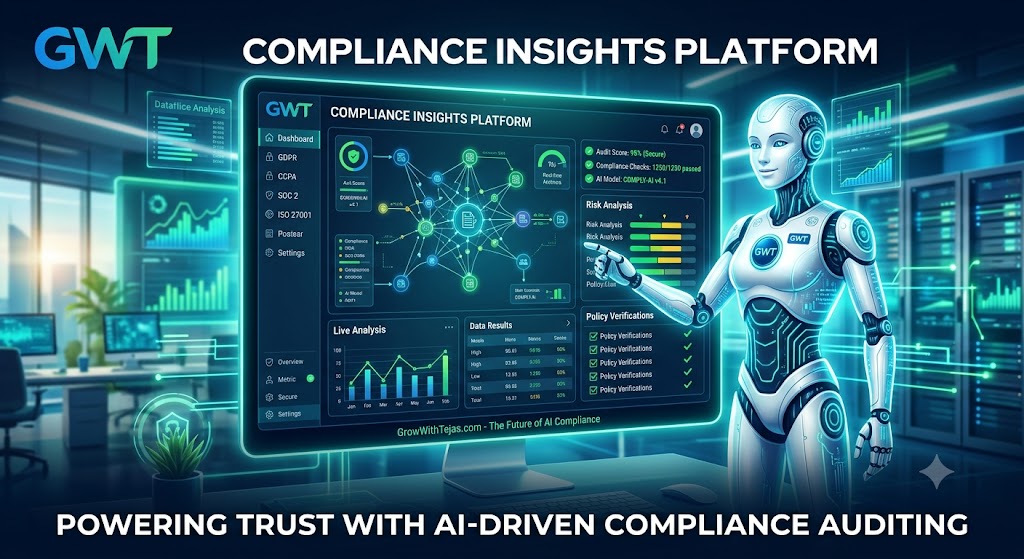
These platforms automatically monitor AI systems, detect compliance risks, generate audit reports, and help organizations comply with regulations such as GDPR, HIPAA, ISO 27001, SOC 2, PCI DSS, and emerging AI governance laws.
In this guide, you’ll learn what AI compliance auditing software is, why businesses need it, its key features, benefits, challenges, and the best practices for implementation.
What Is AI Compliance Auditing Software?
AI compliance auditing software is a specialized platform that continuously evaluates AI models, data usage, decision-making processes, and organizational policies to ensure they comply with legal, ethical, and industry regulations.
Instead of manually checking thousands of records, the software automates compliance monitoring and creates audit-ready documentation.
The software can monitor:
- AI model decisions
- Data privacy compliance
- Security controls
- Employee AI usage
- Risk management
- Regulatory documentation
- Vendor compliance
- Model performance
- Explainability reports
Why Businesses Need AI Compliance Auditing Software
As AI adoption grows, regulators are increasing oversight.
Businesses may face:
- Data privacy violations
- Biased AI decisions
- Lack of transparency
- Security vulnerabilities
- Poor documentation
- Non-compliance penalties
- Customer trust issues
AI compliance software helps reduce these risks by continuously monitoring AI systems and generating evidence for auditors.
Key Features of AI Compliance Auditing Software
1. Automated Compliance Monitoring
Continuously scans AI systems to detect policy violations.
Benefits
- Real-time alerts
- Faster issue detection
- Lower compliance risk
2. AI Governance Dashboard
Provides centralized visibility into all AI applications.
Dashboard metrics include:
- AI inventory
- Risk scores
- Compliance status
- Audit history
- User activity
3. Audit Trail Generation
Automatically records every important AI event.
Examples:
- Model updates
- Data changes
- User access
- Prompt history
- Policy modifications
This creates a complete audit trail for regulators.
4. Risk Assessment
Identifies high-risk AI systems before they create legal issues.
Risk categories include:
- Privacy
- Bias
- Security
- Model drift
- Ethical concerns
- Regulatory exposure
5. Policy Management
Organizations can create AI governance policies such as:
- Employee AI usage rules
- Data handling guidelines
- AI approval workflows
- Vendor policies
- Security standards
The software verifies adherence to these policies.
6. Documentation Automation
One of the biggest compliance challenges is documentation.
AI compliance auditing software automatically creates:
- Audit reports
- Compliance evidence
- Risk assessments
- Control mappings
- Executive summaries
- Regulatory documentation
7. Bias Detection
Responsible AI requires fairness.
Modern platforms detect:
- Gender bias
- Age bias
- Race bias
- Geographic bias
- Decision inconsistencies
8. Explainable AI (XAI)
Many regulations require organizations to explain AI decisions.
Compliance platforms generate understandable explanations for:
- Customers
- Auditors
- Regulators
- Internal teams
Benefits of AI Compliance Auditing Software
Saves Time
Manual compliance reviews can take weeks.
Automation reduces auditing time significantly.
Reduces Human Error
Automated monitoring minimizes mistakes in compliance reporting.
Improves Data Security
The software identifies:
- Unauthorized access
- Data leaks
- Weak permissions
- Sensitive data exposure
Faster Regulatory Audits
With audit-ready reports, businesses spend less time preparing for external audits.
Better Decision Making
Executives gain real-time visibility into AI risks through dashboards and analytics.
Builds Customer Trust
Demonstrating responsible AI practices strengthens customer confidence and brand reputation.
Industries That Benefit
Healthcare
- Patient data protection
- HIPAA compliance
- AI-assisted diagnosis oversight
Banking
- Fraud detection governance
- Fair lending checks
- Financial regulations
Insurance
- Transparent underwriting
- Bias monitoring
- Claims automation compliance
Manufacturing
- Quality assurance
- Predictive maintenance governance
- Supply chain compliance
Retail
- Customer privacy
- Recommendation transparency
- AI marketing compliance
Government
- Public-sector AI accountability
- Procurement oversight
- Citizen data protection
Common Compliance Standards Supported
Most AI compliance auditing software helps organizations align with:
- GDPR
- HIPAA
- SOC 2
- ISO 27001
- PCI DSS
- NIST AI Risk Management Framework
- Internal corporate governance policies
- Emerging AI regulations
Challenges Without AI Compliance Software
Organizations relying on manual processes often struggle with:
- Missing documentation
- Inconsistent audits
- Human errors
- Slow reporting
- Regulatory fines
- Poor AI governance
- Lack of visibility into AI usage
Best Practices for Implementation
Establish an AI Governance Team
Assign responsibility for AI oversight across legal, security, compliance, and technology teams.
Maintain an AI Inventory
Track every AI model, tool, and vendor used within the organization.
Automate Continuous Monitoring
Move beyond periodic audits to real-time compliance checks.
Review Policies Regularly
Update AI governance policies as regulations evolve.
Train Employees
Educate staff on responsible AI use, security, and privacy obligations.
Future Trends
AI compliance platforms are rapidly evolving. Expect increased adoption of:
- Real-time regulatory updates
- Autonomous compliance agents
- Continuous AI risk scoring
- Automated evidence collection
- AI ethics monitoring
- Predictive compliance analytics
- Explainability enhancements
- Cross-border compliance management
How to Choose the Right AI Compliance Auditing Software
Before selecting a platform, consider:
- Regulatory coverage
- Ease of integration
- Automation capabilities
- Reporting quality
- Security features
- Scalability
- User experience
- Vendor support
- Custom policy management
- Pricing and total cost of ownership
Conclusion
As AI becomes central to business operations, compliance is no longer optional. Organizations need tools that continuously monitor AI systems, document decisions, detect risks, and simplify audits.
Implementing AI compliance auditing software helps businesses reduce regulatory risk, improve governance, protect sensitive data, and build trust with customers and regulators. Whether you’re a startup adopting generative AI or a large enterprise managing complex AI workflows, investing in compliance automation today prepares your organization for tomorrow’s regulatory landscape.
Frequently Asked Questions (FAQs)
1. What is AI compliance auditing software?
It is software that automates the monitoring, reporting, and auditing of AI systems to ensure compliance with legal, ethical, and industry standards.
2. Who should use AI compliance auditing software?
Organizations using AI in regulated or high-impact environments, including healthcare, finance, insurance, manufacturing, retail, and government.
3. Can AI compliance software help with GDPR?
Yes. Many solutions include privacy monitoring, data governance, consent tracking, and audit reporting to support GDPR compliance.
4. Does AI compliance software replace human auditors?
No. It automates repetitive monitoring and documentation while helping auditors work more efficiently with accurate evidence.
5. What features are most important?
Look for automated monitoring, audit trails, risk assessments, bias detection, explainability, policy management, and reporting.
6. Is AI compliance software suitable for small businesses?
Yes. Many platforms are cloud-based and scalable, making them suitable for startups and small businesses as well as large enterprises.
7. Can it monitor generative AI tools?
Many modern solutions can monitor the use of generative AI applications, helping organizations enforce governance and usage policies.
8. How often should AI systems be audited?
Continuous monitoring is ideal, with formal reviews conducted regularly or whenever major models or policies change.