Best Free SEO Tools You Should Use
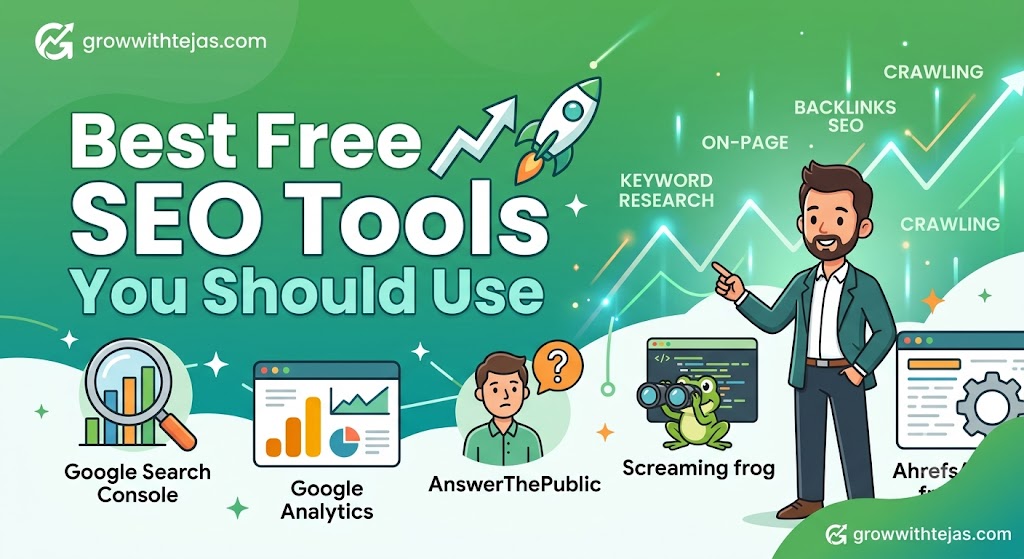
“`html “`Search Engine Optimization (SEO) doesn’t have to be expensive. While premium SEO platforms offer advanced features, many free SEO tools provide everything beginners, bloggers, and small businesses need to improve their rankings on Google.
Whether you’re researching keywords, checking website health, analyzing competitors, or tracking rankings, these tools can save you time and money.
In this guide, you’ll discover the best free SEO tools you should use in 2026 to grow your website traffic.
Introduction
- Hook: High-ranking websites don’t require $100+/month SEO tool subscriptions—especially when starting out.
- Problem: Most beginner/intermediate marketers waste money on features they don’t need or rely on outdated tool recommendations.
- Solution: A curated, tested guide to the best actually free (and freemium) SEO tools available.
- Quick Summary Box / Table of Contents: Jump links for quick navigation to specific tool categories (Keyword Research, Technical, On-Page, Off-Page).
2. Category 1: Official Google Tools (The Non-Negotiables)
Briefly explain why native search engine tools provide the most accurate first-party data.
- 2.1 Google Search Console (GSC)
- Best for: Tracking indexation, search queries, CTR, and site health.
- Pro Tip: How to find quick-win keywords ranking on position 8–15.
- 2.2 Google Analytics 4 (GA4)
- Best for: Measuring organic traffic behavior and user engagement.
- 2.3 Google Keyword Planner
- Best for: Seed keyword generation and official search volume estimates.
- 2.4 Google Trends
- Best for: Identifying seasonal trends and topic momentum.
3. Category 2: Free Keyword Research & Intent Tools
Focus on discovering low-competition long-tail keywords and real user questions.
- 3.1 AnswerThePublic / AlsoAsked
- Best for: Mapping search intent and uncovering “People Also Ask” questions.
- 3.2 Ahrefs Free Keyword Generator
- Best for: Fast phrase match ideas and basic Keyword Difficulty (KD) scores.
- 3.3 KeywordTool.io (Free Version)
- Best for: Scraping autocomplete suggestions across Google, YouTube, and Amazon.
4. Category 3: Free Technical SEO & Audit Tools
Highlight tools that detect crawl errors, broken links, and site speed bottlenecks.
- 4.1 Screaming Frog SEO Spider (Free up to 500 URLs)
- Best for: Deep technical site crawls, 404 detection, and header analysis.
- 4.2 PageSpeed Insights & GTmetrix
- Best for: Core Web Vitals optimization and page load speeds.
- 4.3 Ahrefs Webmaster Tools (AWT)
- Best for: Ongoing site health monitoring and free backlink audits.
5. Category 4: Free On-Page & Content Optimization Tools
Tools to streamline content writing, metadata creation, and structure.
- 5.1 Rank Math / Yoast SEO (Free Plugins)
- Best for: Content scoring, Schema markup setup, and XML sitemaps.
- 5.2 ChatGPT / Claude (Free Tiers)
- Best for: Brainstorming title tags, meta descriptions, and outline generation.
- 5.3 Hemingway Editor
- Best for: Improving content readability and user experience.
6. Comparison Table: Best Free Tool by Use Case
A quick scannable cheat sheet summarizing the best tool for every SEO task.
| Task | Primary Free Tool | Key Limitation |
| Search Performance Data | Google Search Console | Retains data for 16 months |
| Technical Crawling | Screaming Frog | 500 URLs limit in free tier |
| Keyword Difficulty | Ahrefs Free Keyword Tool | Shows top 10 results only |
| Search Intent Mapping | AnswerThePublic | Limited free searches per day |
7. Step-by-Step Action Plan: How to Build a Free SEO Tech Stack
- Phase 1 (Setup): Connect Google Search Console & GA4.
- Phase 2 (Audit): Run a Screaming Frog crawl to fix low-hanging errors.
- Phase 3 (Research): Use Ahrefs Free Tools + Google Trends for your content calendar.
- Phase 4 (Optimize): Use Rank Math and Hemingway Editor before hitting publish.
8. Frequently Asked Questions (FAQ Section for Schema & Snippets)
- Can you do complete SEO using only free tools?
- What is the best free alternative to Ahrefs and SEMrush?
- Is Google Search Console completely free to use?
9. Conclusion & Call to Action (CTA)
- Summary: SEO success depends on strategy and execution, not expensive software.
- CTA for GrowWithTejas: Encourage readers to comment with their favorite free tool or subscribe to the newsletter for more organic growth guides.
Why Use Free SEO Tools?
Free SEO tools help you:
- Find profitable keywords
- Improve website speed
- Fix technical SEO issues
- Optimize blog posts
- Analyze backlinks
- Monitor search rankings
- Understand user behavior
- Increase organic traffic
These tools are ideal for bloggers, affiliate marketers, freelancers, startups, and small business owners.
1. Google Search Console
One of the most powerful free SEO tools available.
Features
- Monitor keyword rankings
- Submit XML sitemap
- Check indexing status
- Find pages with errors
- View search impressions
- Discover click-through rate (CTR)
Best For
- Technical SEO
- Indexing issues
- Performance monitoring
2. Google Analytics 4 (GA4)
Understand how visitors interact with your website.
Features
- Traffic sources
- User behavior
- Conversion tracking
- Engagement metrics
- Audience insights
Knowing which pages perform best helps you create more successful content.
3. Google Keyword Planner
Originally designed for advertisers, this tool is also useful for SEO.
Features
- Keyword ideas
- Monthly search volume
- Competition level
- Related keywords
Perfect for beginners looking for keyword opportunities.
4. Google Trends
Google Trends shows what people are searching for in real time.
Use it to:
- Find trending topics
- Compare keywords
- Discover seasonal searches
- Plan content calendars
Excellent for content marketing.
5. Ubersuggest (Free Version)
A popular keyword research and SEO analysis tool.
Features
- Keyword suggestions
- Domain overview
- Traffic estimation
- SEO audit
- Backlink data
The free version offers limited daily searches but is still valuable.
6. Ahrefs Free Webmaster Tools
Ahrefs offers a generous free toolkit for website owners.
Features
- Site audit
- Broken link detection
- Internal linking suggestions
- SEO health score
- Backlink overview
Ideal for technical SEO improvements.
7. Bing Webmaster Tools
Don’t ignore Bing traffic.
Features include:
- Keyword performance
- SEO reports
- Crawl errors
- Site scan
- URL inspection
It also provides additional indexing insights.
8. Screaming Frog SEO Spider (Free Version)
One of the best website crawling tools.
Free version allows crawling up to 500 URLs.
Helps identify:
- Broken links
- Duplicate content
- Missing meta descriptions
- Missing titles
- Redirect chains
- Canonical issues
9. PageSpeed Insights
Website speed is a Google ranking factor.
This tool measures:
- Core Web Vitals
- Mobile performance
- Desktop performance
- Loading speed
- Optimization suggestions
Faster websites generally provide a better user experience.
10. GTmetrix
Another excellent website speed testing tool.
It provides:
- Performance scores
- Waterfall reports
- Largest Contentful Paint (LCP)
- Optimization recommendations
Useful alongside PageSpeed Insights.
11. AnswerThePublic
Need blog topic ideas?
AnswerThePublic generates questions people ask online.
Examples:
- How does SEO work?
- What is local SEO?
- Why is SEO important?
Perfect for creating content that matches search intent.
12. SEO Minion
A free Chrome extension that helps with on-page SEO.
Features include:
- Broken link checking
- SERP preview
- Heading analysis
- Link highlighting
- Hreflang validation
Very useful for content creators.
13. MozBar
MozBar lets you analyze websites directly from your browser.
Shows:
- Domain Authority (DA)
- Page Authority (PA)
- Meta tags
- Link metrics
Helpful for competitor research.
14. Yoast SEO (WordPress)
One of the most popular SEO plugins.
Features:
- XML sitemap
- Meta titles
- Meta descriptions
- Readability analysis
- Schema support
A great starting point for WordPress users.
15. Rank Math SEO
Many users prefer Rank Math because it includes more free features.
Benefits:
- Advanced schema
- Keyword optimization
- XML sitemap
- Redirection manager
- SEO scoring
Ideal for WordPress websites.
16. Grammarly
Although not an SEO tool, Grammarly improves content quality.
It helps:
- Correct grammar
- Improve readability
- Fix spelling mistakes
- Enhance clarity
Better content leads to better user engagement.
17. ChatGPT
AI can significantly speed up your SEO workflow.
Use ChatGPT for:
- Content outlines
- Blog ideas
- Keyword clustering
- Meta descriptions
- FAQ creation
- Content optimization
Always review AI-generated content for accuracy and originality.
18. Canva
Visual content improves engagement and shareability.
Use Canva to create:
- Featured images
- Infographics
- Social media graphics
- Pinterest pins
Optimized visuals can also attract traffic through image search.
19. XML Sitemap Generator
Generate an XML sitemap if your CMS doesn’t create one automatically.
A sitemap helps search engines discover and crawl your pages efficiently.
20. Rich Results Test
This tool checks whether your structured data (Schema markup) is valid and eligible for rich search results.
It supports:
- FAQ schema
- Article schema
- Product schema
- Breadcrumb schema
Implementing structured data can improve your visibility in search results.
Best Free SEO Tool Stack for Beginners
If you’re just starting, this combination covers most SEO tasks:
- Google Search Console
- Google Analytics 4
- Google Keyword Planner
- Google Trends
- Rank Math SEO
- PageSpeed Insights
- Screaming Frog SEO Spider
- ChatGPT
- Canva
- Grammarly
Together, these tools can help you build a strong SEO foundation without spending money.
Tips to Get the Most from Free SEO Tools
- Perform keyword research before writing.
- Optimize titles and meta descriptions.
- Improve page speed regularly.
- Fix broken links and crawl errors.
- Publish high-quality, original content.
- Monitor rankings and clicks every month.
- Update older articles to keep them relevant.
Consistency is more important than using expensive software.
Final Thoughts
Free SEO tools have become incredibly powerful. By combining Google’s own tools with reputable third-party solutions, you can research keywords, optimize content, fix technical issues, and monitor your site’s performance without paying for premium software.
As your website grows, you can evaluate whether advanced paid tools are necessary. Until then, these free options provide more than enough functionality to help improve your search rankings and attract more organic traffic.
Frequently Asked Questions (FAQs)
1. Which is the best free SEO tool?
Google Search Console is widely considered the best free SEO tool because it provides direct insights into your website’s performance in Google Search.
2. Can I do SEO without paying for tools?
Yes. Many successful websites rely on free tools for keyword research, technical SEO, analytics, and content optimization.
3. Which free tool is best for keyword research?
Google Keyword Planner, Google Trends, and Ubersuggest’s free version are excellent options for finding keyword ideas.
4. Which free SEO plugin is best for WordPress?
Rank Math and Yoast SEO are both popular choices, with Rank Math offering more advanced features in its free version.
5. How often should I use SEO tools?
Review your website’s performance weekly, monitor rankings monthly, and perform technical SEO audits every few months.
Tags: free SEO tools, SEO tools 2026, Google Search Console, keyword research, technical SEO, on-page SEO, SEO plugins, Rank Math, Yoast SEO, website optimization, blogging tools, digital marketing, Grow With Tejas
“`html “`