If you are running an online business, a blog, or a personal brand, you have likely heard this phrase a dozen times: “The money is in the list.”
While social media algorithms change constantly, reach fluctuates, and ad costs rise, your email list remains an asset you completely control. Email marketing consistently delivers one of the highest returns on investment (ROI) of any digital marketing channel—averaging around $36 to $40 for every $1 spent.
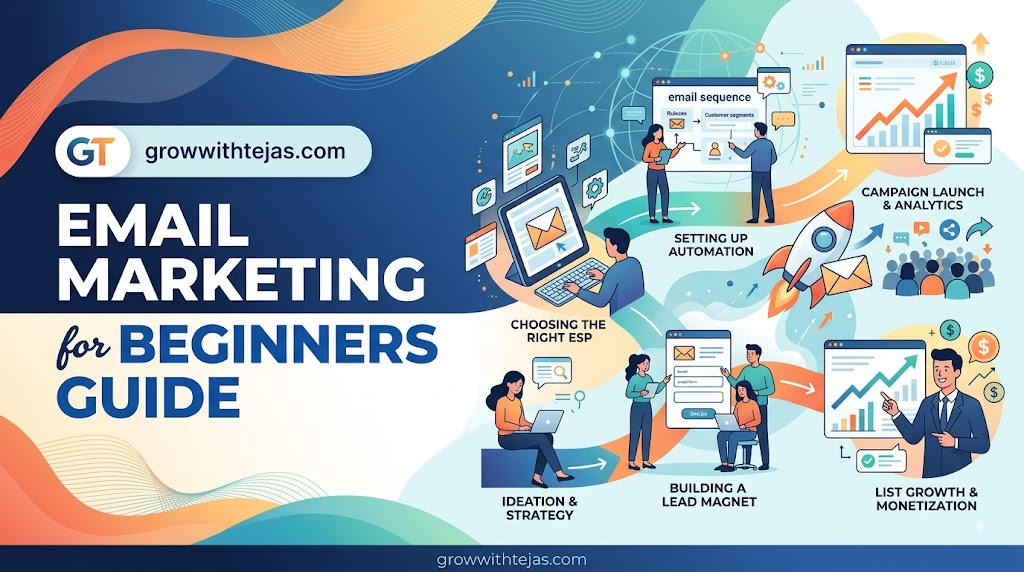
Whether you are starting from complete scratch or want to refine your initial setup, this beginner-friendly guide breaks down everything you need to know to launch, grow, and monetize an email list effectively.
1. Why Email Marketing Should Be Your Top Priority
Before diving into tools and tactics, it is crucial to understand why email marketing works so well:
- Direct Access to Your Audience: Social media channels sit between you and your followers. Email delivers your message directly into a personal inbox.
- Higher Conversion Rates: People who subscribe to your list have actively opted in to hear from you. They are significantly more likely to buy than a passive social media scroller.
- Full Ownership: You don’t own your Instagram, TikTok, or YouTube followers—the platform does. Your email list, however, is a database you own outright.
2. Step 1: Choose the Right Email Marketing Platform (ESP)
To send professional emails at scale without landing in the spam folder, you need an Email Service Provider (ESP). Avoid using regular personal accounts like standard Gmail or Outlook for mass emails, as this violates anti-spam regulations (like CAN-SPAM and GDPR).
Here are the top beginner-friendly platforms to consider:
- Kit (formerly ConvertKit): Ideal for creators, bloggers, and digital product sellers. Offers clean automations and intuitive tag-based subscriber management.
- MailerLite: Excellent for beginners on a budget. It features an easy drag-and-drop builder, built-in landing pages, and a generous free tier.
- Brevo (formerly Sendinblue): Great choice if you need a blend of email marketing, transactional emails, and SMS capabilities.
- Mailchimp: A well-known option with basic features, best suited for absolute novices who want a familiar brand interface.
3. Step 2: Build Your Lead Magnet (Give People a Reason to Join)
“Subscribe to my newsletter” rarely works anymore. To persuade visitors to share their email addresses, offer a Lead Magnet—a free, high-value resource delivered instantly in exchange for their email.
High-Converting Lead Magnet Ideas:
- Checklists & Worksheets: Simple, actionable, and quick to consume (e.g., “The Ultimate 10-Step SEO Checklist”).
- Cheat Sheets & Templates: Save your audience time (e.g., “5 Fill-in-the-Blank Email Copy Templates”).
- Ebooks or Guides: Short PDF guides that solve one specific problem.
- Mini-Courses: A 3-day or 5-day automated email series teaching a skill.
- Discounts / Free Shipping: Best suited for e-commerce stores.
Rule of Thumb: Keep your lead magnet focused on one specific problem and make it easy to digest in under 10 minutes.
4. Step 3: Create High-Converting Opt-In Forms & Landing Pages
Once your lead magnet is ready, make it simple for people to sign up. Place sign-up opportunities across key touchpoints on your site:
- Dedicated Landing Page: A distraction-free page dedicated solely to converting visitors into subscribers via your lead magnet.
- Header / Top Bar Banner: A subtle sticky bar across the top of your site.
- In-Content Forms: Embed opt-in boxes inside your most popular blog posts.
- Exit-Intent Popups: Trigger an opt-in prompt right as a user moves their cursor to leave your page.
5. Step 4: Set Up Your Welcome Email Sequence
The moment someone subscribes, they are at their highest level of engagement. Never leave them hanging with just a generic confirmation message. Set up an automated Welcome Sequence (3 to 5 emails):
| Email # | Goal | Key Content |
| Email 1 | Deliver & Welcome | Deliver the freebie immediately, introduce yourself, and set expectations for future emails. |
| Email 2 | Provide Value | Share your best blog post, video, or a quick, actionable tip without asking for anything in return. |
| Email 3 | Story & Connection | Share your core story, why you started your platform, and how you help people like them. |
| Email 4 | Soft Pitch / CTA | Introduce your flagship product, service, or affiliate recommendation that solves their problem further. |
6. Step 5: What to Write in Your Weekly Emails
Consistency is key to maintaining a healthy email list. Aim to email your audience at least once a week or every two weeks so they remember who you are.
Here are 4 easy content frameworks when you don’t know what to write:
- The Curated Newsletter: Share 3 to 5 interesting links, tools, or resources you found this week in your niche.
- Behind-the-Scenes Story: Share a personal win, a mistake you made, or a lesson learned in your business journey.
- How-To / Educational: Break down a step-by-step tutorial on a topic your audience struggles with.
- Q&A / FAQ: Take a common question from a reader or client and answer it in detail.
7. Best Practices for High Open & Click Rates
To ensure your emails actually get read and acted upon, apply these core optimizations:
- Craft Punchy Subject Lines: Keep them under 50 characters. Curiosity, urgency, and personal tone work best (e.g., “Quick question about your strategy…” or “The #1 mistake beginners make”).
- Optimize Preheader Text: Use the preview snippet next to the subject line to add context and boost curiosity.
- Write Like a Friend: Use “I” and “You.” Plain-text style emails often outperform heavily designed HTML newsletters because they feel more personal.
- Include ONE Clear Call-to-Action (CTA): Avoid overwhelming readers with dozens of links. Focus each email on driving a single action (e.g., reading a post, replying to the email, or buying a product).
- Maintain List Hygiene: Every few months, clean out inactive subscribers who haven’t opened an email in 60–90 days to keep your deliverability rates high.
Final Thoughts
Email marketing isn’t about spamming people’s inboxes—it’s about building genuine, long-term relationships with an audience that trusts you.
Start simple: pick an ESP, create a helpful freebie, set up a simple welcome email, and start capturing subscribers today. As your list grows, your business will grow right alongside it.
What questions do you have about setting up your email marketing stack? Let me know in the comments below!